


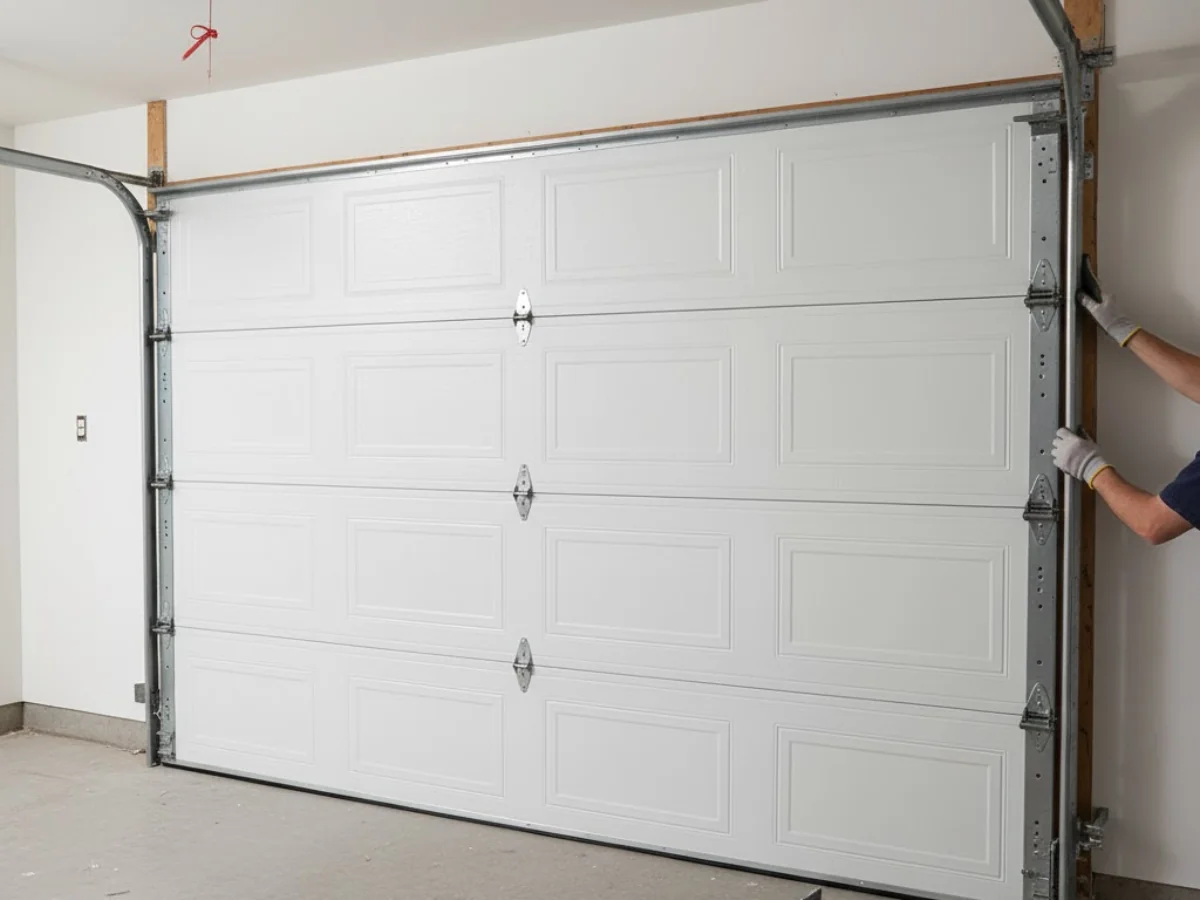
Boston winters are tough on everything, but your garage door often takes the hardest hit. When a severe Nor'easter rolls in off Massachusetts Bay, bringing sub-zero temperatures, coastal wind, and heavy, wet snow, your garage door acts as the primary shield protecting your home, vehicles, and thermal envelope.
As a garage door technician with 15 years of field experience, I have seen firsthand what severe New England weather does to heavy mechanical systems. From snapped torsion springs frozen stiff by arctic air to doors blown off their tracks by gale-force winds, cold weather exposes every weak point in a garage door assembly.
This guide covers the mechanics of cold-weather failure, how to spot urgent safety hazards, step-by-step troubleshooting, and exactly when to call for professional emergency garage door repair Boston MA homeowners count on to stay safe and warm.
1. How Boston’s Extreme Winter Weather Forces Garage Door Failures
To understand why garage doors fail in the winter, you need to look at how extreme cold, rapid temperature swings, and high moisture affect metals, rubbers, and electronics. Boston's unique coastal geography subjects local homes to freeze-thaw cycles, high humidity, salt air corrosion, and sudden pressure drops.
[ Heavy Snow & Ice Accumulation ]
│
▼
[ Freeze-Thaw Ground Lock ]
│
▼
[ High Resistance on Opener ] ──► [ Snapped Cables / Stripped Gears ]
│
▼
[ Broken Torsion/Extension Spring ]
The Physics of Cold Metal and Broken Springs
Garage door springs do the heavy lifting for your door system. Whether you have torsion springs mounted above the door opening or extension springs running along the overhead tracks, these high-tensile steel components are under massive torque.
- Metal Embrittlement: When temperatures drop below freezing, steel becomes brittle. The molecular structure tightens, reducing the metal's ductility. If a spring is already near the end of its typical lifespan (usually 10,000 to 15,000 cycles, or roughly 7 to 10 years of average use), a sudden drop in temperature will cause it to snap under stress.
- Thermal Contraction: Metal contracts when exposed to freeze conditions. This contraction increases friction along track channels and tightens spring coils, requiring the garage door opener to work significantly harder to lift the exact same weight.
Freeze-Thaw Cycles and Bottom Seal Adhesion
Boston frequently experiences weather where temperatures hover around 35°F during the day with melting snow, only to plunge into the teens overnight.
- The Ground Lock Effect: Melting snow pools along the rubber bottom weatherstripping of your door. When the temperature drops, this water turns into solid ice, effectively welding the rubber seal to your concrete drive or apron.
- Catastrophic Opener Damage: If you hit the wall button while the bottom seal is frozen to the ground, the opener motor will try to pull the door up with full force. This often pulls the top panel out of alignment, strips the plastic gear assembly inside the motor housing, or snaps the lifting cables.
Wind Load Strain from Coastal Storms and Nor'easters
Nor'easters bring sustained winds of 40 to 60 mph, with gusts reaching even higher along coastal areas like South Boston, East Boston, and Charlestown.
- Positive and Negative Pressure: Wind exerts heavy positive pressure pushing against the outside of the door, and negative suction pressure pulling it outward as air whips around the structure.
- Track Pop-Outs: Unreinforced standard garage doors flex under heavy wind pressure. This flexing pulls the rollers directly out of the vertical tracks, leaving a heavy 150 to 300-pound door hanging precariously by a single cable or wedged crookedly in the opening.
2. Top Winter Garage Door Emergency Failures and How to Identify Them
Recognizing the signs of a critical system failure helps you protect your family and avoid costly repairs down the road. Below are the most common mechanical failures brought on by New England winter weather.
Winter Problem | Root Cause | Primary Symptom | Emergency Level |
Snapped Torsion Spring | Cold metal embrittlement + cycle fatigue | Loud bang; door lifted only 2-3 inches | HIGH - Do not operate manually |
Frozen Bottom Rubber | Freeze-thaw water pooling on threshold | Door won't move; motor hums/stalls | MEDIUM - Thaw before operating |
Track Misalignment | Foundation shifts / ice buildup in tracks | Jerky movement, grinding noise | HIGH - Risk of door falling off |
Snapped Lifting Cable | Corrosion from coastal salt air + overloading | Door hangs crookedly, loose cables | CRITICAL - Immediate repair needed |
Sensor Failure | Lens condensation, frost, snow banks | Door opens fine, refuses to close | LOW - Clear lenses/snow path |
Snapped Torsion or Extension Springs
A broken spring is the single most common emergency call during a cold snap. Homeowners often mistake the noise for a gunshot or a falling branch hitting the roof.
- Visual Sign: Look at the horizontal steel bar above your closed garage door. If you see a clear gap of 1 to 2 inches in the tightly wound spring coil, the spring has snapped.
- Operational Sign: The opener motor hums and strain-strains, but the door only moves a few inches before stopping. Do not force the door open. Attempting to lift a door with a broken spring manually can cause severe physical injury.
NORMAL SPRING: [=======================================]
BROKEN SPRING: [============] GAP [================]
Thrown, Off-Track, or Frayed Lifting Cables
The aircraft-grade steel cables running from the bottom brackets to the cable drums bear the full weight of the door alongside the springs.
- Salt and Moisture Corrosion: Road salt brought into the garage on car tires melts and turns into a corrosive mist. Over time, this corrodes the bottom cable strands.
- The Slack Cable Trap: If the door hits an obstruction like an accumulation of packed ice at the threshold, one side stops moving while the opener keeps unwinding the cable. The cable pops off the pulley drum, leaving the door suspended unevenly at a dangerous angle.
Frozen Tracks and Roller Jamming
Dust, dirt, and old petroleum-based grease inside garage door tracks turn into a thick, sticky sludge when temperatures drop below freezing.
- Hardened Grease: Incorrect lubricants like standard motor grease or WD-40 act as a magnet for grime and thicken in the cold, seizing the roller bearings.
- Misalignment: Moisture that penetrates concrete expansion joints near the garage door jamb can freeze and expand, shifting the jamb brackets and throwing the track out of plumb.
3. Step-by-Step Troubleshooting Guide for Common Winter Issues
Before calling for emergency garage door repair Boston MA technicians, perform these initial diagnostic checks. Safety Note: Never attempt to adjust, repair, or unbolt springs, cables, or bottom brackets yourself. They are under dangerous levels of tension.
[ Garage Door Fails to Move ]
│
┌──────────────────┴──────────────────┐
▼ ▼
[ Check Bottom Seal for Ice ] [ Inspect Above Door ]
│ │
Is it frozen solid? Is spring split/gapped?
├── YES ──► Melt ice gently ├── YES ──► CALL PROFESSIONAL
└── NO ──► Check sensors └── NO ──► Check remote/power
Problem A: The Opener Motor Runs, But the Door Won't Budge
- Inspect the Bottom Threshold: Look closely at where the rubber seal meets the driveway. If you see ice adhesion, do not force the motor.
- Safely Clear the Ice: Use warm (not boiling) water or spread non-corrosive, concrete-safe ice melt along the base of the door. Gently tap the rubber seal with the wooden handle of a broom to release the bond.
- Check the Lock Switch: Winter wind vibrations can accidentally engage the manual wall console lock switch. Verify that your wall control console is unlocked.
Problem B: The Door Closes Partially, Reverses, and Flashes the Opener Light
- Clear the Photo-Eye Path: Heavy snowfall or drifting snow will block the safety eye sensors mounted 6 inches off the ground on either side of the door jamb. Clear away all snow, ice, and leaf debris.
- Wipe Condensation Off Lenses: Cold outdoor air mixed with warm air from an attached garage creates condensation on the photo-eye lenses. Gently wipe the optical lenses with a microfiber cloth.
- Verify LED Indicator Alignment: Both safety sensors should display steady, non-flickering indicator lights (typically amber on the sending unit and green on the receiving unit). If a light is blinking, adjust the bracket alignment by hand until it shines steadily.
Problem C: Loud Screeching, Popping, or Grinding Noises During Operation
- Identify Incorrect Lubrication: If you lubricated your tracks with grease or heavy oil during the summer, it has likely hardened in the cold.
- Clean the Tracks: Take a clean rag soaked in mild solvent or degreaser and wipe down the inside of the vertical and curved steel tracks to remove hardened grease buildup.
- Apply Low-Temperature Silicone Spray: Spray a silicone-based or synthetic garage door lubricant lightly over the roller bearings, hinges, metal bushings, and torsion spring coils. Never spray lubricant inside the tracks themselves—tracks require friction to allow the rollers to turn smoothly rather than slide.
For further reading on home weatherization and garage winterization safety standards, check resources provided by the U.S. Department of Energy or review local structural guidance via the City of Boston Official Government Portal.
4. When Is Garage Door Failure an Absolute Emergency?
Not every garage door problem requires an urgent, late-night service call. However, operating a compromised system under certain conditions poses immediate safety, security, and structural risks.
[ SAFETY CHECK EVALUATION ]
│
┌───────────────────────────┼───────────────────────────┐
▼ ▼ ▼
[ Security Risk ] [ Weather Exposure ] [ Hazard Condition ]
Car locked inside or Door stuck fully open Heavy door hanging by
door stuck wide open during sub-zero storm single cable or roller
│ │ │
└───────────────────────────┼───────────────────────────┘
│
▼
[ CALL FOR EMERGENCY REPAIR ]
Scenario 1: Vehicle Trapped Inside Before a Critical Commute
If your spring snaps while your car is inside the garage, you are functionally trapped. A typical double-car residential garage door weighs anywhere from 150 to 350 pounds. Without the counterbalancing assistance of a functional spring, attempting to lift the door manually can lead to severe back injuries, crushed fingers, or dropping the door abruptly.
Scenario 2: Door Stuck Open During Sub-Zero Conditions
Leaving your garage door wedged open even a few inches during a Massachusetts winter storm causes rapid heat loss.
- Freezing Plumbing Pipes: Attached garages often house water supply lines, laundry facilities, or tankless water heaters. Freezing air rushing into the space can burst these pipes within hours, causing thousands of dollars in water damage.
- HVAC Overload: Cold air infiltrating an attached garage cools the walls adjoining your living spaces, causing your furnace to run continuously and driving up heating bills.
Scenario 3: Structural Dislodgement or Broken Cables
If rollers have jumped out of their tracks, or if one side of the door is hanging lower than the other due to a snapped lifting cable, the system is structurally unstable. A crooked door can twist and collapse out of its tracks entirely, creating an immediate danger to anyone standing nearby.
5. Preventing Winter Emergencies: A Seasonal Checklist
Preventative maintenance in late autumn is the best defense against unexpected mechanical failures during winter storms. Follow this simple checklist to prepare your system for sub-zero weather.
[ FALL MAINTENANCE CHECKLIST ]
│
├── 1. Replace Weatherstripping
├── 2. Test Auto-Reverse Safety Systems
├── 3. Apply Low-Temp Silicone Lubricant
├── 4. Inspect Cables for Fraying & Salt Damage
└── 5. Balance Check (Manual Disconnect Test)
Inspect and Replace Weatherstripping: Check the bottom seal and perimeter jamb seals for cracks, tears, or brittle areas. Replace dried-out seals to prevent water intrusion and freezing.- Perform a Balance Test: Disconnect the garage door opener pulling cord while the door is closed. Lift the door manually halfway up and let go. A balanced door will hover smoothly in place. If it slams shut or flies open, the springs are out of balance and require professional adjustment.
- Apply Silicone Lubricant: Lubricate all moving metal parts with a low-temperature rated silicone spray before the first hard freeze.
- Test the Auto-Reverse Safety System: Place a 2x4 piece of wood flat on the ground beneath the center of the door path. Lower the door using the wall switch. When the door touches the wood, it should reverse direction within two seconds. If it does not reverse, the travel force needs adjustment.
- Inspect Steel Cables: Visually inspect the lower ends of both lifting cables for fraying, rust, or broken wire strands.
For additional consumer protection tips on selecting licensed contractors in Massachusetts, consult the Federal Trade Commission.
Frequently Asked Questions (FAQs)
Can I manually open my garage door if the bottom seal is frozen to the driveway?
No, you should never force the door open manually or with the remote if it is frozen to the ground, as this will tear the rubber weather seal, damage panel sections, or strip your opener's internal drive gears. You must first melt the ice using concrete-safe salt, warm water, or a hair dryer before attempting to operate the door.
Why does my garage door remote stop working only when it gets extremely cold outside?
Extreme cold drains transmitter battery power rapidly and hardens old grease inside the motor housing, which increases resistance and causes the circuit board to shut down as a safety measure. Replacing remote batteries and inspecting wall console connections will usually resolve cold-weather remote failures.
Is it safe to use a space heater inside the garage to thaw out a frozen door system?
Using unvented fuel heaters or placing electric space heaters too close to flammable materials like wood panels, lubricants, or vehicle fuels creates a severe fire hazard. A safer approach is to apply targeted warmth directly to frozen components using a standard hand-held hair dryer or heat gun set on low.
How do I prevent salt air and road salt from ruining my steel garage door cables?
Rinsing the bottom six inches of your garage door tracks and cable assemblies with fresh water once a month during winter removes corrosive road salt tracked in by vehicle tires. Following up with a light coating of marine-grade silicone spray protects the steel strands against oxidation.
Final Thoughts
A winter garage door failure in Boston is more than just an inconvenience—it affects your home's thermal efficiency, security, and physical safety. High winds, heavy snow, and freezing temperatures combine to test every component of your overhead door system. By keeping up with seasonal maintenance, watching for warning signs, and avoiding risky DIY spring repairs, you can ensure your home stays protected no matter what the weather brings.
How Can Alpine Garage Doors NE Help You?
When winter weather strikes and leaves your vehicle trapped or your home exposed, you need prompt, reliable local service. Alpine Garage Doors NE delivers dependable emergency garage door repair Boston MA homeowners rely on to keep their property secure through every season.
Our experienced, fully equipped technicians handle everything from snapped torsion springs and off-track doors to ice-damaged openers and cable replacements. We arrive with high-grade, cold-weather rated parts built to withstand New England's harshest winter conditions.
Contact Alpine Garage Doors NE Today:
- Business Address: 422 W Loop 281, Longview, TX 75605, United States
- Phone Number: (430) 227-7005
Don't let a frozen or broken garage door compromise your safety. Call us right away for professional garage door repair, maintenance, and emergency service.