


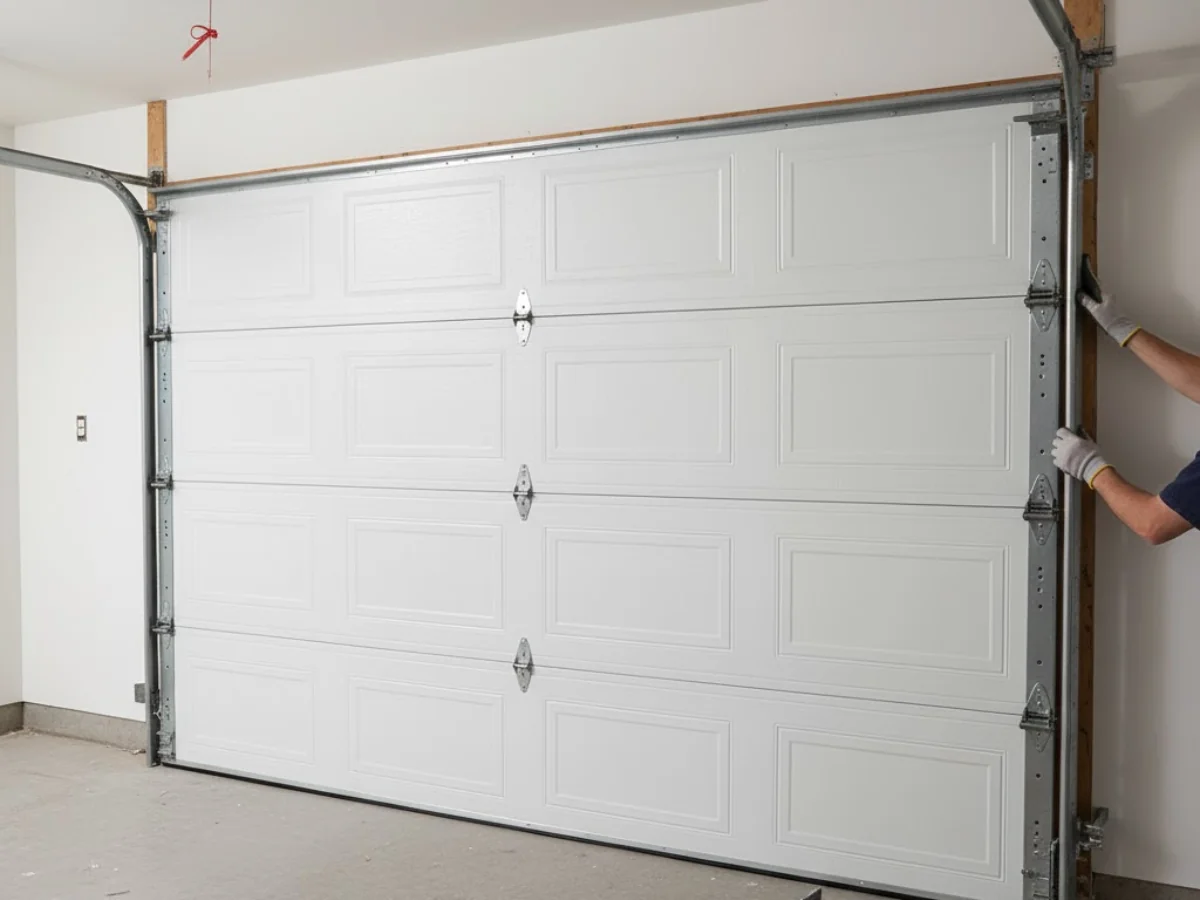
Boston winters are no joke. From historic Nor'easters dumping feet of heavy, wet snow to brutal freezing rain and sub-zero wind chills off the harbor, the climate in New England tests the limits of any home. While you are busy bundling up in layers, drinking hot coffee, and prepping your snowblower, there is one massive moving part of your house that takes a silent beating every single day: your garage door.
As the largest moving object in your home, your garage door relies on a delicate balance of moving metal parts, tightly wound springs, electronics, and weather seals. When the classic Boston freeze sets in, everything changes. Metal shrinks, lubricants turn into thick gunk, water freezes inside track tracks, and electronic sensors get blinded by swirling snowbanks.
Ignoring these winter warning signs does not just mean a minor inconvenience—it can leave your car trapped inside when you are already late for work, or worse, create a major safety hazard for your family.
As a garage door technician with 15 years of boots-on-the-ground experience right here in Massachusetts, I have seen every winter disaster imaginable. In this comprehensive guide, we will dive deep into exactly how freezing temperatures and coastal weather affect your garage system, how to spot trouble before it strikes, and when it is time to call in the local pros for expert garage door repair.
1. How Freezing Temperatures Affect Metal Components
Your garage door system is essentially a complex machine made up of steel, aluminum, and iron. If you remember anything from science class, it is that heat expands and cold contracts. When the thermometer drops below freezing in neighborhoods from Southie to West Roxbury, that science experiment happens right inside your garage.
The Problem with Contracting Metal
When metal gets extremely cold, it shrinks slightly. While this microscopic change might not seem like a big deal, your garage door operates on incredibly tight tolerances.
- Track Misalignment: The long steel tracks that guide your door up and down can warp or bend slightly as they contract. This causes the rollers to bind, scrape, or get stuck entirely. You will often hear this happening before the door stops working; it usually sounds like a loud, screeching, or grinding noise.
- Strained Rollers: The small wheels (rollers) that travel inside the tracks contain tiny ball bearings. When the metal casings contract, these bearings cannot spin freely. Instead of rolling smoothly, they slide and drag, putting massive stress on your automated opener.
Frozen and Hardened Lubricants
One of the most common service calls we get in December and January involves garage doors that start to open, hesitate, and then reverse back down. Homeowners often think their motor is burning out, but the real culprit is usually frozen grease.
Many homeowners use standard mechanics' grease or heavy oils on their tracks and springs. In the summer, this works fine. But when a Boston winter hits, that thick grease turns into a sticky, paste-like sludge. Instead of helping the door slide, it acts like glue, binding the rollers and roller hinges. This triggers the safety mechanism on your opener, causing it to think it hit an object, which forces the door back open.
Brittle Steel and Snapped Springs
Perhaps the most dangerous side effect of freezing weather is its impact on garage door springs. Your garage door uses either torsion springs (mounted on a bar above the door) or extension springs (stretching along the sides of the tracks). These springs do 90% of the heavy lifting. They are under immense tension at all times.
Extreme cold makes high-tensile steel brittle. When you combine brittle metal with the extra weight of a snow-laden door, you get a recipe for disaster. It is incredibly common for a cold-snapped spring to break during the first freezing cycle of the winter. When a spring snaps, it sounds like a gunshot inside your garage, and your door will immediately become too heavy to lift by hand or by the motor. Trying to operate a door with a broken spring can burn out your opener or cause the door to crash down violently.
2. The Battle Against Ice, Snow, and Moisture
Boston's coastal location means our winters are not just cold—they are incredibly wet. The constant cycle of snow melting during the day and freezing solid at night creates a playground for ice dams and frozen blockages around your garage opening.
+-------------------------------------------------------------+
| THE THAW-FREEZE DAMAGE CYCLE |
+-------------------------------------------------------------+
| 1. Daytime Melt: Snow melts off the roof & driveway. |
| 2. Seepage: Water Pools directly beneath the rubber seal. |
| 3. Nighttime Freeze: Temps drop; water turns to solid ice. |
| 4. The Bond: The rubber bottom seal fuses completely to |
| the concrete driveway floor. |
| 5. The Break: Opener is activated; rubber tears away or |
| the garage door panels bend from the strain. |
+-------------------------------------------------------------+
Doors Frozen to the Ground
This is the classic New England morning surprise. Water from melting snow on your driveway or roof runs down the face of your garage door and pools right along the bottom rubber weather stripping. Overnight, the temperature plummets, and that pool of water turns into a solid sheet of ice, fusing your door directly to the concrete floor.
If you hit the wall button on your opener without checking first, one of three things will happen:
- The rubber weather seal will rip completely off the bottom of the door.
- The top panels of your door will bend or buckle as the opener tries to pull against solid ice.
- The gears inside your automated garage door opener will strip out, requiring a complete motor replacement.
The Hazard of Heavy Snow Accumulation
A couple of inches of fluffy snow won't hurt, but a classic Boston nor'easter brings heavy, wet, concrete-like snow. If you drift snow up against the bottom of your garage door, you are adding hundreds of pounds of dead weight that the door was never designed to lift.
Furthermore, when snow accumulates against wooden or uninsulated steel doors, moisture seeps into the joints. For older wooden garage doors common in historic Boston neighborhoods, this moisture causes the wood to swell, rot, and sag, destroying the structural integrity of the door panels. For steel doors, trapped moisture speeds up rust along the bottom panel, which can compromise the structural strength of the lower hinges and section brackets.
3. Electronic Vulnerabilities in Cold Weather
Modern garage doors are smart, packed with safety features and electronic components designed to protect your family. However, these electronics are highly sensitive to extreme temperature swings and moisture.
Blinded Safety Eye Sensors
Every automated garage door installed over the last few decades utilizes infrared safety eyes. These sensors sit about six inches off the ground on both sides of the door tracks. They project an invisible beam across the opening; if anything breaks that beam, the door will not close.
In the winter, these sensors face multiple challenges:
- Snow and Slush Blockages: Shoveling snow or driving your car into the garage can easily kick up slush, snow, or mud directly onto the lens of the sensor.
- Condensation and Frost: Warm air from inside your car or garage mixing with the freezing outdoor air creates condensation. This fog or frost forms over the sensor lenses, scattering the infrared light beam and tricking the system into thinking an object is blocking the path.
- Sun Glare off Snow: The winter sun sits lower in the sky. When that sunlight reflects off a blanket of bright white snow directly into the receiving sensor lens, it can blind the sensor entirely, preventing your door from closing altogether.
Depleted Remote Control Batteries
Have you noticed that your garage door remote works perfectly when you are standing right next to the door, but fails when you try to click it from your driveway? Cold weather kills battery life.
Chemical reactions inside standard alkaline batteries slow down drastically when exposed to freezing temperatures. If you leave your garage door remote in your cold car overnight throughout January, the battery voltage drops, severely reducing the signal range and leaving you stranded in your frozen driveway.
4. The Critical Importance of Garage Door Insulation in Boston
Many homeowners look at an uninsulated garage door and think, "Well, I don't hang out in my garage, so why do I care if it's cold?" This is a massive misconception. An uninsulated garage door turns your garage into a giant refrigerator that saps energy directly from your living space.
Protecting Your Home’s Thermal Envelope
If you have an attached garage, it likely shares one or two walls—and often a ceiling—with your heated living spaces (like a bedroom or living room). A cold garage acts like a heat sink, constantly pulling warmth out of your home through those shared walls. By upgrading to an insulated garage door with a high R-value, you create a thermal barrier that traps heat inside your home, significantly lowering your monthly heating bills.
Protecting What is Inside Your Garage
Your garage is not just a parking spot; it houses your water heater, laundry appliances, pressure washers, paints, and tools. An uninsulated garage door can allow temperatures inside to drop below freezing, putting your plumbing pipes at risk of bursting and ruining expensive household chemicals and liquids.
When shopping for an insulated door, you will typically choose between two types:
- Polystyrene Insulation: These are vinyl-backed foam inserts placed inside the panels. They offer good, basic insulation and are highly cost-effective.
- Polyurethane Insulation: This is a dense, injected foam that expands inside the core of the door panel. It provides the highest R-value, superior structural rigidity, and fantastic sound dampening against busy Boston street noise.
5. Proactive Winter Maintenance Checklist for Homeowners
The best way to handle garage door repair is to prevent the breakdown from happening in the first place. Before the first major frost hits New England, spend 30 minutes performing this simple, DIY winterization checklist.
Step 1: The Visual Inspection
With the door closed, stand inside your garage and closely look at the tracks, rollers, hinges, and springs. Look for any loose bolts, frayed cables, rusted sections, or signs of wear. If you see cables that look like a peeling rope or springs with noticeable gaps, do not attempt to fix them yourself—call a professional immediately.
Step 2: The Balance Test
Testing the balance of your door ensures your opener isn't working twice as hard as it should.
- Disconnect your automated garage door opener by pulling the red emergency release cord.
- Manually lift the door halfway up by hand and let go.
- The Result: If the door stays perfectly in place or hovers slightly, your springs are well-balanced. If the door slams down hard or shoots upward violently, your springs are out of balance and require professional adjustment.
+-------------------------------------------------------------+
| GARAGE DOOR BALANCE DIAGNOSIS |
+-------------------------------------------------------------+
| Door Behavior | System Status | Action Needed |
+---------------------+-------------------+-------------------+
| Stays in place | Perfectly Balanced| None (Good to go!)|
| Slams down hard | Weak/Fatigued | Professional |
| | Springs | Tensioning |
| Shoots upward | Over-tensioned | Professional |
| | Springs | Adjustment |
+-------------------------------------------------------------+
Step 3: Lubrication with the Right Products
Throw away your thick WD-40 or heavy mechanical grease. For New England winters, you need a high-quality, silicone-based or lithium-based garage door spray lubricant. These specialized lubricants are specifically designed to remain fluid and slippery even in sub-zero temperatures.
- Spray a light coat directly onto the metal hinges, roller bearings (avoid plastic rollers), extension springs, and track curves.
- Wipe away any excess drips with a rag. Never lubricate the inside flat surface of the tracks themselves; this can cause the rollers to slip and slide rather than roll properly.
Step 4: Weatherstripping Clean and Prep
Inspect the rubber weatherstrip along the bottom and sides of your door. If it is cracked, dry-rotted, or missing chunks, it is letting freezing air and rain right into your garage. Replace worn stripping immediately. To prevent your good weatherstripping from sticking to the driveway ice, spray a light coating of silicone spray onto a clean rag and wipe it along the bottom rubber surface. This creates a water-resistant layer that stops ice from forming a bond.
6. Real-World Troubleshooting Scenarios
Let's look at a few common winter scenarios that homeowners face and exactly how to handle them safely.
Scenario A: Your Door is Frozen to the Concrete Floor
You wake up, hit the button, and hear the motor groan, but the door refuses to budge.
- What NOT to do: Do not keep pressing the button. Do not use a crowbar to pry the door up, as you will permanently bend the bottom aluminum retainer.
- The Solution: Grab a bucket of warm water (never boiling water, which can crack cold concrete or warp vinyl) and pour it directly along the exterior base of the bottom rubber seal. Let it sit for a minute to melt the ice bond. Once free, manually lift the door and immediately shovel or sweep away the pooled water and remaining slush so it doesn’t refreeze.
Scenario B: The Opener Runs, but the Door Doesn't Move
You hear the electric motor humming along happily, but the garage door stays completely still.
- The Cause: The cold weather likely caused the emergency release carriage to slip, or the internal nylon drive gears inside your opener housing have stripped out due to trying to lift a frozen or overweight door.
- The Solution: Check to see if your red emergency cord was pulled accidentally. If the carriage is engaged but the motor spins without moving the chain or belt, your internal gears are stripped. This requires a professional technician to open the motor casing and replace the drive gear kit.
Scenario C: The Door Closes Partway and Immediately Reverses
The door starts going down, gets halfway through its path, and suddenly clicks and heads back up to the ceiling.
- The Cause: This is almost always caused by misaligned tracks due to metal contraction, hardened old grease causing a bind, or dirty safety eyes.
- The Solution: First, check your safety eyes at the bottom of the tracks. Wipe the lenses clean with a soft microfiber cloth and ensure they are pointed directly at one another (most models have a solid green or amber light to show they are aligned). If the lights are solid, look down the track length for any noticeable bends or chunks of frozen debris stuck inside the channel.
7. When to Call a Professional Garage Door Technician
While clearing snow from your sensors and applying a light coat of silicone spray are fantastic weekend DIY projects, garage door systems house immense physical forces that can cause severe injury if mishandled. Knowing when to put down the wrench and call in the experts at Alpine Garage Doors NE can save your door, your property, and your health.
You should always call a professional technician for:
- Spring Replacement: Torsion springs hold enough mechanical energy to cause fatal injuries if they snap unexpectedly during handling. Replacing them requires specialized winding bars, heavy-duty tools, and precise calculations based on the exact weight of your specific garage door.
- Snapped Cables: When a spring breaks, the heavy steel cables that lift the door often fray or snap under the sudden shift in load. These cables are under high tension and should never be serviced by an amateur.
- Track Realignment and Section Replacement: If your door has jumped completely out of its tracks, or if a structural panel is buckled from hitting a snowbank, the entire assembly becomes unstable. A certified tech can safely safely re-track the system, balance the door weight, and swap out individual damaged panels without requiring you to buy a whole new door system.
For more information on general home winterization and structural care during freezing weather, you can read helpful guides provided by the Federal Emergency Management Agency (FEMA) or review local building maintenance codes on the Official Website of the City of Boston. For specialized safety standards regarding automated home access systems, check out resources from the International Door Association (IDA).
Frequently Asked Questions (FAQs)
Can I use a hair dryer or heat gun to thaw a frozen garage door?
Yes, you can use a hair dryer on a low heat setting to gently melt the ice along the bottom seal, but you must be careful not to hold it in one spot for too long to avoid melting or warping the rubber stripping. Never use a high-heat industrial heat gun or an open flame, as these pose a severe fire hazard to your door panels and home.
Why does my garage door opener remote only work when I am incredibly close to the door during the winter?
Extreme cold significantly reduces the chemical efficiency and voltage output of the batteries inside your remote control, which severely weakens the signal strength it broadcasts. Replacing your old remote batteries with fresh, high-quality lithium batteries before winter sets in will help maintain a strong signal range even in sub-zero weather.
Is it safe to leave my garage door open a few inches during a blizzard to keep the tracks from freezing?
No, leaving your garage door cracked open during a blizzard allows driving snow and freezing moisture to blow directly into your garage, which can freeze your interior tracks, rollers, and sensitive electrical components. It also creates a massive draft that lowers the temperature of your entire home and provides an open invitation for pests seeking warmth.
How often should I apply winter lubricant to my garage door system in New England?
You should apply a high-quality silicone or lithium spray lubricant twice a year: once in the late autumn before the first freezing temperatures arrive, and once in the early spring to clear away winter moisture and salt residue. Avoid using regular WD-40, as it acts as a degreaser and cleaner rather than a long-lasting weather-resistant lubricant.
Final Thoughts
A Boston winter is a true endurance test for your home, and your garage door stands right on the front lines of defense. By understanding how freezing temperatures shrink metal components, how ice binds weather seals to your driveway, and how snow blocks vital electronic sensors, you can stay one step ahead of the weather.
Regularly performing basic maintenance—like clearing snow away from the base, keeping safety sensors wiped clean, and using proper temperature-rated silicone lubricants—will ensure your door operates reliably all season long. Remember, taking care of small issues today prevents expensive emergency breakdowns in the middle of a January snowstorm.
How Can Alpine Garage Doors NE Help You?
If your garage door is grinding, groaning, or completely frozen shut, you don't have to face the New England cold alone. The team at Alpine Garage Doors NE is here to provide fast, reliable, and expert garage door repair services to homeowners throughout the greater Boston area. Our fully licensed and insured technicians come equipped with heavy-duty winter gear and top-tier replacement parts to get your door moving safely and efficiently, no matter how bad the weather gets.
Don't get left out in the cold—contact us today to schedule your comprehensive winter tune-up or emergency repair service!
- Business Address: 150 Cross St, Boston, MA 02109
- Phone Number: (617) 865 7222