


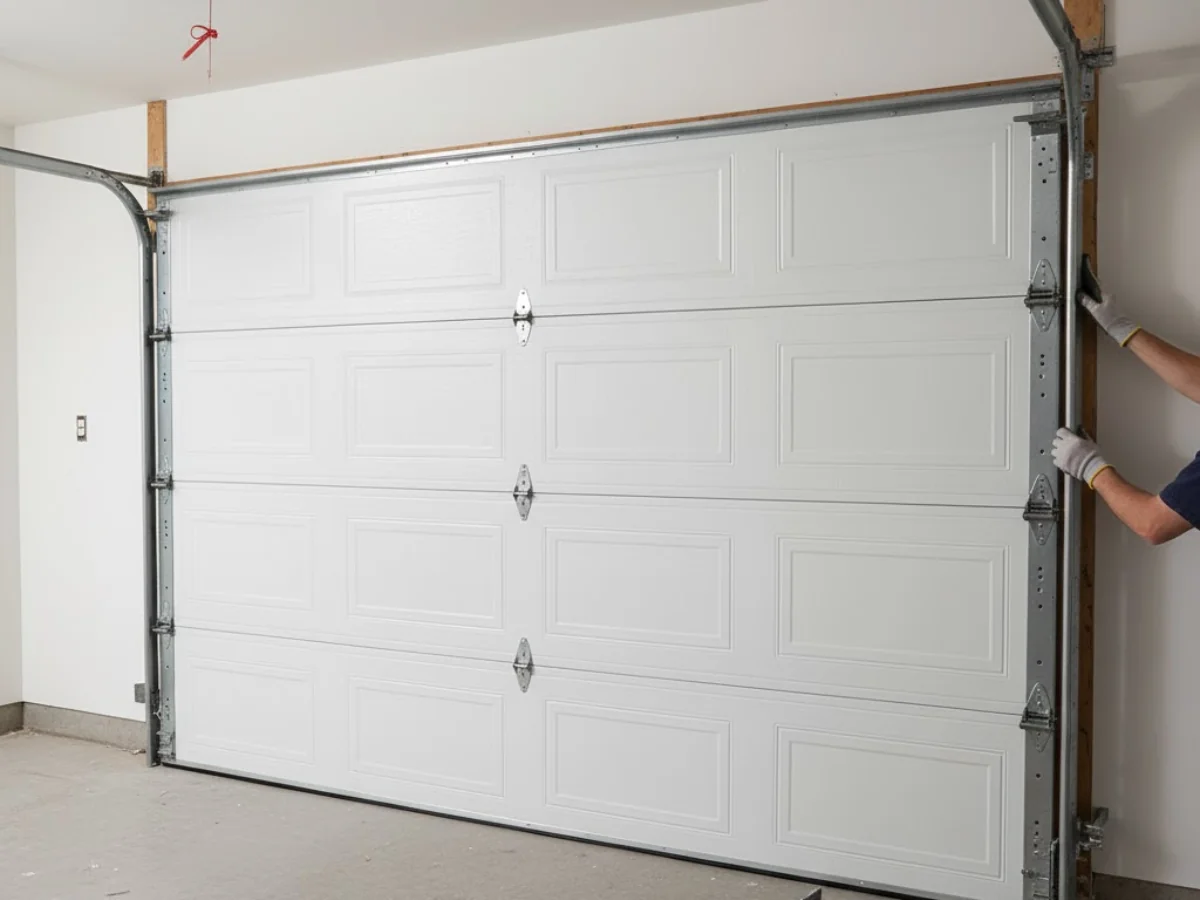
The Toll of Boston Winters on Your Garage Door
Boston winters are tough on everything—from local roads to home heating systems. However, few home components suffer as silently or as severely during a New England freeze as your garage door. Weighing anywhere from 150 to over 400 pounds, your garage door is likely the largest and heaviest moving mechanical object in your home. It relies on a delicate balance of spring tension, track alignment, motor torque, and chemical lubrication to operate smoothly.
When the temperature drops below freezing in neighborhoods from Back Bay to South Boston, metal contracts, lubricants harden, rubber seals freeze solid to concrete, and safety electronics misbehave. A minor squeak that you ignored in September can easily turn into a snapped cable or a burned-out opener motor by January.
Understanding how cold weather affects your door system is the best way to prevent sudden breakdowns, save money on emergency fixes, and keep your family safe. In this guide, we will break down the science behind winter garage door failures, walk through real-world troubleshooting steps, and share professional maintenance habits to keep your system moving smoothly all winter long.
The Science of Cold Weather vs. Garage Door Components
To understand why garage door failures peak between December and March, it helps to look at basic physical changes that occur when temperature drops. Garage doors rely on mechanical engineering principles. When sub-zero air hits steel, aluminum, rubber, and electronics, several predictable reactions take place.
+-----------------------------------------------------------------------+
| WINTER STRESSORS ON DOORS |
+-----------------------------------------------------------------------+
| 1. Cold Metal Contraction --> Springs strain, tracks narrow |
| 2. Grease Viscosity Shift --> Lubricant turns into sticky paste |
| 3. Rubber Hardening --> Bottom seals crack & freeze to driveway|
| 4. Moisture Expansion --> Water freezes in track, blocking wheel |
+-----------------------------------------------------------------------+
Thermal Contraction and Metal Fatigue
Metals contract as temperatures fall. While a fraction of an inch of contraction in a 16-foot steel track might not sound like much, it significantly shifts tolerances within the system.
- Tracks: Cold tracks narrow slightly, causing rollers to bind rather than roll freely.
- Springs: Torsion and extension springs operate under thousands of pounds of kinetic tension. Cold temperatures make steel brittle—a phenomenon known as the ductile-to-brittle transition. When brittle steel experiences sudden tension shifts during an opening cycle, it snaps.
- Cables: High-tension steel cables can become stiff and fray more easily when misaligned on contracted drums.
Viscosity Shifts in Lubricants
Standard grease and oil are designed to flow freely at room temperature. In sub-freezing temperatures, standard petroleum-based lubricants thicken into a heavy, gummy paste.
Instead of reducing friction, hardened grease actually creates drag. It traps grit, salt, and dirt, forcing your opener motor to work up to twice as hard to move the door.
Rubber Degradation and Adhesion
The vinyl or rubber weather seal at the bottom of your garage door remains flexible in spring and summer. During a Boston freeze, that rubber loses its elasticity, becoming stiff and brittle. If snow or slush pools along your driveway threshold and freezes overnight, the bottom seal becomes bonded directly to the concrete. Attempting to open a door frozen to the ground often rips the seal off or burns out the drive gear in your opener.
Component Deep-Dive: What Happens to Your Door in a Deep Freeze?
Every part of a garage door system plays a role in keeping it operating safely. Let’s look at how cold weather impacts each component.
+-------------------------------------------------------------------+
| COMPONENT DAMAGE QUICK REFERENCE |
+-------------------------------------------------------------------+
| Component | Primary Winter Risk | Key Failure Symptom |
+----------------+------------------------+-------------------------+
| Torsion Springs| Thermal Shock / Snap | Loud Bang, Door Won't Rise|
| Weather Seals | Ice Adhesion / Cracking| Door Frozen to Concrete |
| Track Rollers | Hardened Grease Drag | Loud Grinding, Jerky Motion|
| Photo-Eyes | Condensation / Fogging | Door Reverses Immediately|
| Opener Gears | Sheared Teeth / Strain | Motor Hums, No Movement |
+----------------+------------------------+-------------------------+
1. Torsion and Extension Springs
Springs do the heavy lifting in a garage door system, not the opener motor. They counterbalance the door's weight so it feels like a light 10-pound object when operated manually.
- Why They Fail in Winter: Cold temperatures weaken steel, while constant cycling creates micro-fractures over time. Most springs are rated for 10,000 to 20,000 cycles. A cold snap is usually what triggers that final, catastrophic snap in an aging spring.
- Warning Signs: A loud pop (like a gunshot) coming from the garage, visible gaps in the coil spring above the door, or a door that lifts only two inches before stopping.
2. Garage Door Tracks and Steel/Nylon Rollers
Tracks guide the door smoothly along its vertical and horizontal path.
- Track Misalignment: Thermal contraction can pull track brackets slightly out of alignment. If your track is off by even an eighth of an inch, rollers will scrape, stick, or pop out of the track entirely.
- Roller Wear: Nylon rollers with unsealed bearings trap water inside. When that water freezes, the bearings lock up, turning a smooth roller into a dragging slide that wears down the track.
3. Weatherstripping and Bottom Seals
Your bottom seal keeps cold air, water, pests, and debris out of your garage space.
- Freezing to the Floor: When wet snow melts under the door during the day and freezes at night, the door seals stick to the ground.
- Perimeter Seals: Side and top jamb seals stiffen in the cold, pressing too hard against the door panels and adding extra resistance to the system.
4. Automatic Openers, Belts, and Drive Gears
The garage door opener provides the push and pull needed to move the door safely.
- Gear Shear: Most standard chain and belt drive openers use internal gears made of hardened plastic or nylon. When the door is frozen to the floor, or the tracks are stiffened by cold grease, the motor continues pushing. This extra resistance can strip the teeth right off the internal plastic gears.
- Belt Stiffening: Rubber drive belts can lose flexibility in extreme cold, causing the motor pulley to slip or hum without moving the rail carriage.
5. Photo-Eye Safety Sensors
Located roughly six inches above the floor on either side of the door opening, infrared safety sensors ensure the door doesn't close on people, pets, or vehicles.
- Frost and Condensation: Sudden changes in humidity and temperature—common during Boston winter storms—cause moisture to condense and freeze over the photo-eye lenses.
- Misalignment: Snow shovels, ice scrapers, or boots bumped against frozen, brittle sensor brackets can knock them out of alignment, preventing the door from closing at all.
Boston-Specific Winter Hazards: Coastal Moisture, Road Salt, and Nor'easters
Operating a garage door in Boston presents unique challenges compared to those in inland cities. The local environment introduces specific climate factors that accelerate hardware wear.
BOSTON WINTER HAZARD TRIPLE-THREAT
[ Coastal Moisture ] ----> Accelerates Rust & Cable Fraying
+
[ De-Icing Salts ] ----> Eats Galvanized Track & Bottom Rails
+
[ Nor'easter Winds ] ----> Bends Panels & Forces Snow into Tracks
Coastal Salt Air and Road De-Icing Agents
Boston's proximity to Massachusetts Bay brings salt-laden air, while city salt trucks spread sodium chloride and calcium chloride across driveways and roads.
- Under-Carriage Transfer: Every time you drive into your garage during winter, your car drops slush filled with road salt onto the concrete floor.
- Corrosion Acceleration: Salt-laden slush pools near the bottom of your garage door tracks, bottom brackets, and cables. This creates an electrochemical reaction that dissolves protective zinc coatings on galvanized steel, leading to rapid rusting, cable failure, and track deterioration.
Nor'easter Wind Loads
Nor'easters bring high winds alongside heavy, wet snow.
- Panel Deflection: Strong winds push against large garage door surfaces. Uninsulated or non-reinforced single-layer doors flex under wind load, throwing rollers out of alignment and straining the track system.
- Wind-Driven Snow: Fine, wind-driven snow can bypass worn perimeter weather seals, accumulating inside the tracks and melting directly into the roller bearings.
Historic Neighborhood Architectural Challenges
From historic brownstones in the South End and Back Bay to classic triple-deckers in Dorchester and East Boston, local architecture often presents unique garage setups.
- Tight Tolerances: Older Boston garages often feature low overhead clearance, short driveways, or custom timber doors. Custom wooden doors absorb winter ambient moisture, making them heavy and placing extreme stress on springs and openers designed for lighter loads.
For details on local weather patterns and extreme temperature drops, you can track current updates via [Link: Weather.gov Boston Climate Data].
Real-World Troubleshooting: Diagnosing Cold Weather Failures
When your garage door refuses to open on a freezing morning, taking a systematic approach to troubleshooting helps you identify the issue safely.
SAFETY WARNING: Garage door springs and bottom lift brackets are under extreme tension. Never attempt to adjust, loosen, or replace torsion springs or cables yourself. Misusing these components can cause severe personal injury or property damage. Refer to established industry safety rules such as [Link: DASMA Safety Standards Guidelines] before touching door hardware.
Scenario A: The Door Is Stuck Frozen to the Concrete Floor
- Symptoms: You press your remote, the opener motor hums or strains for two seconds, and then shuts off. The bottom seal is locked to the floor.
- Step 1: Disengage the opener by pulling the manual emergency release cord (the red handle) down and back toward the motor.
- Step 2: Never force the door open using the motor. Pushing the button repeatedly will burn out the motor or strip the drive gear.
- Step 3: Use a plastic snow shovel or scraper to gently clear accumulated ice away from the outside edges of the bottom seal.
- Step 4: Pour warm (never boiling) water along the inside and outside edge of the bottom weather seal to melt the ice bond. Alternatively, use a hair dryer or heat gun on a low setting held at least six inches away from the vinyl.
- Step 5: Once cleared, manually lift the door. Wipe down the rubber seal completely and spread a thin layer of silicone spray along the bottom edge to keep ice from sticking again.
UNSTICKING A FROZEN GARAGE DOOR (SAFE METHOD)
[Pull Emergency Release] --> Disconnect Opener
|
[Clear Snow/Ice Externally] --> Use Plastic Shovel
|
[Apply Warm Water / Heat] --> Melt Ice at Rubber Seal
|
[Manually Raise Door] --> Test Balance
|
[Dry & Apply Silicone] --> Prevent Re-Freezing
Scenario B: The Door Closes Partially, Then Reverses Immediately
- Symptoms: The door starts down normally, hits a point mid-way or near the bottom, stops, and reverses back up while the light on the opener flashes.
- Step 1: Check the optical photo-eyes at the bottom corners of the track.
- Step 2: Inspect lenses for frost, ice crystals, spider webs, or salt fog condensation. Wipe the lenses clean with a soft microfiber cloth.
- Step 3: Check for physical track obstructions. Packed snow, slush, or fallen debris in the bottom vertical tracks can trick the opener’s internal force sensors into detecting an obstacle.
- Step 4: Clear tracks with a stiff brush and check that both sensor LEDs show a solid, non-blinking light indicating proper alignment.
Scenario C: The Motor Hums, But the Drive Chain/Belt Does Not Move
- Symptoms: The garage door opener makes a normal running sound, but the drive trolley doesn't move along the rail, and the door stays down.
- Step 1: Check if the manual emergency release was accidentally pulled. Ensure the trolley carriage is re-engaged with the belt/chain drive.
- Step 2: If the trolley is engaged, the internal plastic drive gear inside the motor housing may be stripped due to cold friction overload.
- Step 3: Disconnect power to the unit and call a professional technician for gear kit replacement or motor servicing.
Scenario D: A Loud Bang in the Garage and the Door Will Not Lift
- Symptoms: You hear a loud sound like a gunshot from the garage. The opener attempts to lift the door, but it moves only a few inches before stalling.
- Step 1: Look up at the wall above the top of the garage door. Inspect the long horizontal torsion spring mounted on the steel bar.
- Step 2: If you see a clear 2-inch to 4-inch gap in the coiled spring, the spring has snapped.
- Step 3: Do not attempt to operate the opener or manually lift the heavy door. Contact a qualified technician immediately for spring replacement.
DIY Maintenance vs. Professional Garage Door Repair
Knowing what maintenance tasks you can handle yourself—and when to call a professional—keeps your door running safely while protecting your investment.
+-------------------------------------------------------------------------+
| DIY VS. PROFESSIONAL SERVICE GUIDE |
+-------------------------------------------------------------------------+
| SAFE FOR DIY HOMEOWNERS | REQUIRES PROFESSIONAL EXPERT |
+-----------------------------------------+-------------------------------+
| Applying silicone lubricants to hinges | Replacing broken torsion springs|
| Cleaning photo-eye lenses | Adjusting high-tension cables |
| Washing salt residue off bottom panels | Re-aligning bent steel tracks |
| Replacing worn perimeter vinyl seals | Repairing internal motor gears|
| Testing safety reversal mechanism | Replacing damaged door panels |
+-----------------------------------------+-------------------------------+
Safe DIY Homeowner Tasks
Homeowners can complete several simple preventive tasks without specialized equipment or dangerous tension tools:
- Lubricating Moving Parts: Apply a high-quality, cold-weather synthetic lubricant to roller bearings, metal hinges, spring coils, and track curves every fall.
- Clearing Threshold Ice and Slush: Keep the driveway area beneath the door clean, dry, and free of salt buildup.
- Cleaning Safety Lenses: Keep optical sensors aligned and free of frost, salt dust, and road grime.
- Inspecting Seals: Check perimeter weatherstripping for cracks, tears, or stiffening, and replace worn seals early.
High-Risk Repairs: When to Call a Professional
Certain repairs carry serious risk due to the immense mechanical force stored within the system.
- Spring Replacement: Torsion springs are wound under high tension. Incorrect tools or improper techniques can cause springs to uncoil violently, risking severe injury.
- Cable Adjustments: Bottom brackets are connected directly to the door springs. Disconnecting a bottom bracket while the system is under tension can snap the cable with dangerous force.
- Track Realignment: Bending structural tracks back into place without proper alignment gauges can bind the system, causing the 300-pound door to fall off its overhead rails.
Step-by-Step Boston Winter Prep Checklist
Preparing your garage door before cold weather sets in prevents winter emergencies. Follow this practical seasonal checklist every October or November.
SEASONAL PREPARATION FLOWCHART
[ 1. Clear & Clean ] --> Wash off salt, clear tracks of debris
|
[ 2. Lubricate ] --> Apply non-silicone synthetic lubricant
|
[ 3. Test Balance ] --> Disengage motor, manually test weight
|
[ 4. Seal Check ] --> Inspect vinyl seals for light leak/gaps
|
[ 5. Safety Test ] --> Perform block test for automatic reverse
Step 1: Clean and Wash Hardware
- Wash salt residue, slush, and road dirt off the bottom section of your door panels, tracks, and weatherstripping using mild soap and warm water.
- Dry the tracks completely with a towel to prevent moisture from freezing inside the roller channels.
Step 2: Use the Right Cold-Weather Lubricant
- DO NOT USE WD-40 or Standard Grease: WD-40 is a solvent, not a permanent lubricant; it strips protective coatings and attracts dirt. Heavy lithium grease, on the other hand, hardens into a thick paste in sub-zero cold.
- USE: A 100% synthetic silicone spray or specialized garage door lubricant rated for sub-zero temperatures (down to -30°F). Spray hinges, roller bearings, lift cables, and spring coils lightly.
Step 3: Check System Balance
- Close the garage door fully.
- Pull the emergency release cord to switch to manual operation.
- Lift the door manually to waist height and let go gently.
- Proper Balance Result: The door should stay in place, suspended roughly 3 to 4 feet off the ground by spring tension.
- Imbalance Result: If the door falls shut or snaps upward rapidly, your springs have lost tension and require professional adjustment.
Step 4: Perform the Auto-Reverse Safety Test
Modern residential garage door openers feature an automatic mechanical safety reversal system.
- Place a standard 2x4 wooden board flat on the driveway concrete directly in the center of the door's path.
- Press your remote button to close the door.
- When the bottom of the door strikes the wooden board, the opener should instantly stop and reverse direction within two seconds.
- If the motor strains against the block without reversing, the force sensitivity settings need immediate professional service.
Step 5: Upgrade Thermal Insulation
Uninsulated steel doors act as huge heat conductors, drawing warmth straight out of attached garages and adjacent living spaces. Upgrading to an insulated multi-layer door (polyurethane or polystyrene core) provides several clear advantages:
- Keeps garage interiors 10°F to 20°F warmer during deep cold snaps.
- Reduces thermal contraction of internal steel parts.
- Dampens operating noise from wind and mechanical movement.
- Prevents interior condensation from forming on cold panel surfaces.
To explore options for improving your home's thermal efficiency, review thermal performance standards through [Link: Energy.gov Home Insulation Guide].
Frequently Asked Questions (FAQs)
How do I stop my garage door opener remote battery from dying quickly in winter?
Cold temperatures slow chemical reactions in standard alkaline batteries, leading to premature voltage drops. Replace remote batteries each autumn with cold-resistant lithium AAA or CR2032 batteries designed to perform reliably down to -40°F.
Can I run my garage door opener if the power goes out during a winter Nor'easter?
Standard garage openers will not work without power unless equipped with an integrated battery backup system. You can open the door manually by pulling the red emergency release cord down and back toward the opener rail to disconnect the drive trolley.
How do I keep keyhole locks on my manual garage door from freezing shut?
Prevent lock freezes by injecting graphite powder or synthetic dry-film lubricant directly into the keyway before winter hits. Never use liquid de-icers containing water, as they eventually wash away existing lubrication and cause severe internal corrosion.
Why does my garage door make a loud popping noise only during cold mornings?
Loud popping noises usually stem from thermal contraction occurring within metal track joints or dry torsion spring coils binding against one another. Applying a heavy coat of synthetic cold-weather lubricant across the entire length of the spring coils eliminates this spring-slap noise.
Final Thoughts
A winter failure from your garage door is more than just an inconvenience—it's a security vulnerability and safety hazard when cold winds sweep through Boston. Snow, ice, salt, and thermal contraction place heavy demands on springs, tracks, rollers, and motors.
By understanding how sub-zero weather affects moving components, using cold-rated silicone lubricants, keeping safety sensors clear, and maintaining healthy bottom seals, you can protect your door system through the toughest winter weather. When high-tension springs break, cables fray, or tracks misalign, rely on qualified local technicians who understand Boston's unique climate challenges to keep your home safe, warm, and accessible.
How Can Alpine Garage Doors New England Help You?
Don't let a winter freeze leave you trapped in your garage! At Alpine Garage Doors New England, our expert technicians bring 15 years of hands-on experience solving Boston’s toughest cold-weather garage door emergencies. From broken torsion spring replacements and bent track realignments to insulated door installations and opener motor repairs, we keep your door moving smoothly no matter what the forecast brings.
Whether you need an urgent repair after a heavy snowstorm or want to schedule a comprehensive winter tune-up, our team is ready to deliver fast, reliable, and professional service.
- Business Name: Alpine Garage Doors New England
- Address: 150 Cross St, Boston, MA 02109
- Phone Number: (617) 865 7222
Call us today at (617) 865 7222 or visit our shop in the North End to schedule your expert garage door repair and service!